Practical guides for companies and software teams maintaining, evolving or modernizing existing .NET applications. Technical content focused on real-world enterprise software challenges.
AI coding assistants: how to use Codex and Claude responsibly in software development
Last updated
13 min read
A practical workflow for using Codex, Claude, and other coding assistants responsibly: analyze first, refine the proposal, then implement, review, and test without giving up technical control.
Securing an ASP.NET Core API: authentication, authorization, rate limiting and audit
Last updated
11 min read
How to design ASP.NET Core API security by separating authentication, policy and resource authorization, rate limiting, API keys, audit and safe error handling.
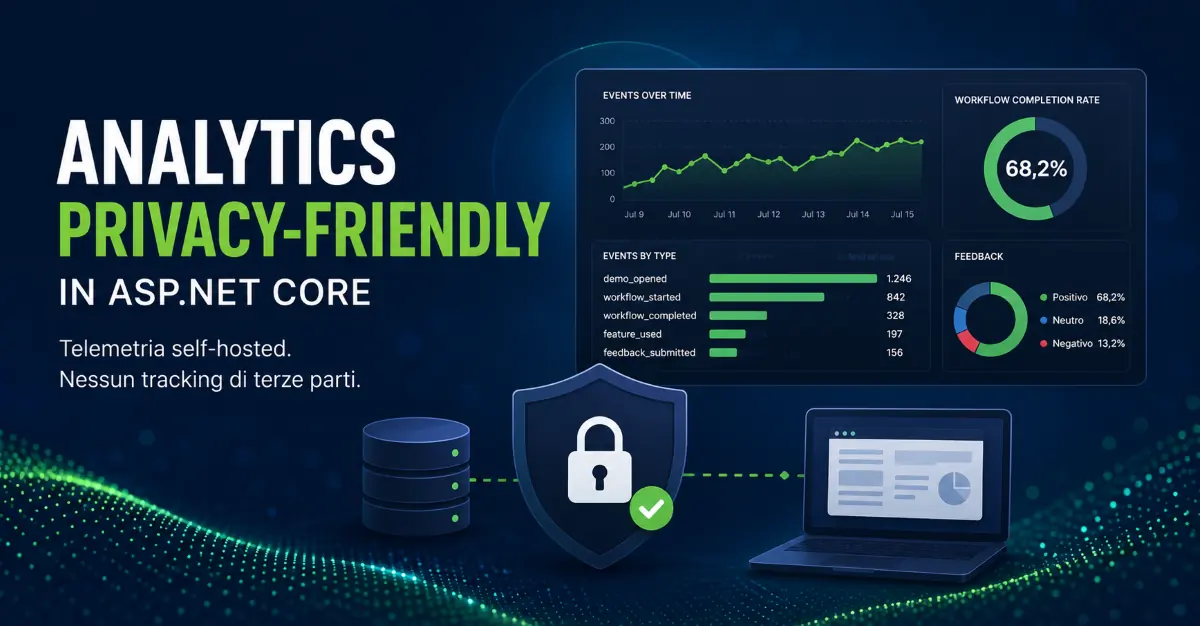
Privacy-friendly analytics in ASP.NET Core: self-hosted telemetry without third-party tracking
Last updated
12 min read
How to design self-hosted product telemetry with ASP.NET Core, EF Core, and SQL Server, collecting only the events you need without sending business data to third-party platforms.
Why a .NET Application Becomes Slow: How to Spot the Real Bottleneck
Last updated
14 min read
When a .NET page is slow, the problem isn't necessarily in the most complex query or the most visible control. This guide offers a practical method for measuring individual operations and tells a real case in which a few queries executed within a loop brought the load from 3.36 to over 30 seconds.
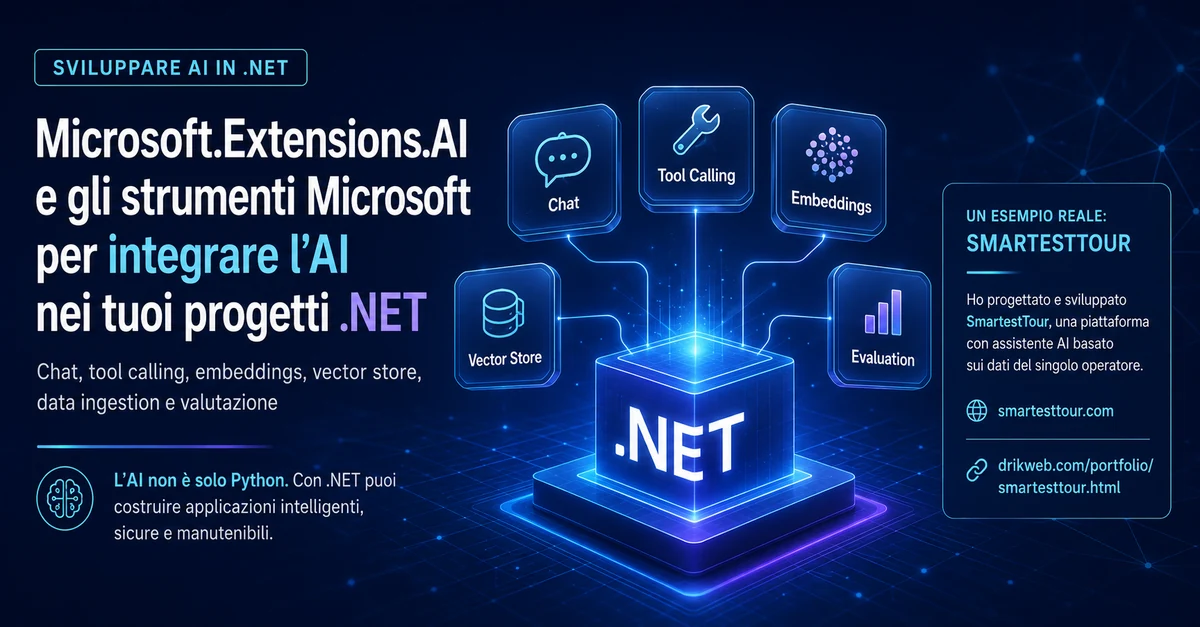
Developing AI Applications in .NET: Microsoft.Extensions.AI and the Microsoft AI Ecosystem
Last updated
14 min read
Microsoft.Extensions.AI and linked libraries show that it is now possible to develop AI applications on .NET without switching stacks. This guide analyzes the main abstractions, the tools available in the Microsoft ecosystem and a real example based on SmartestTour.
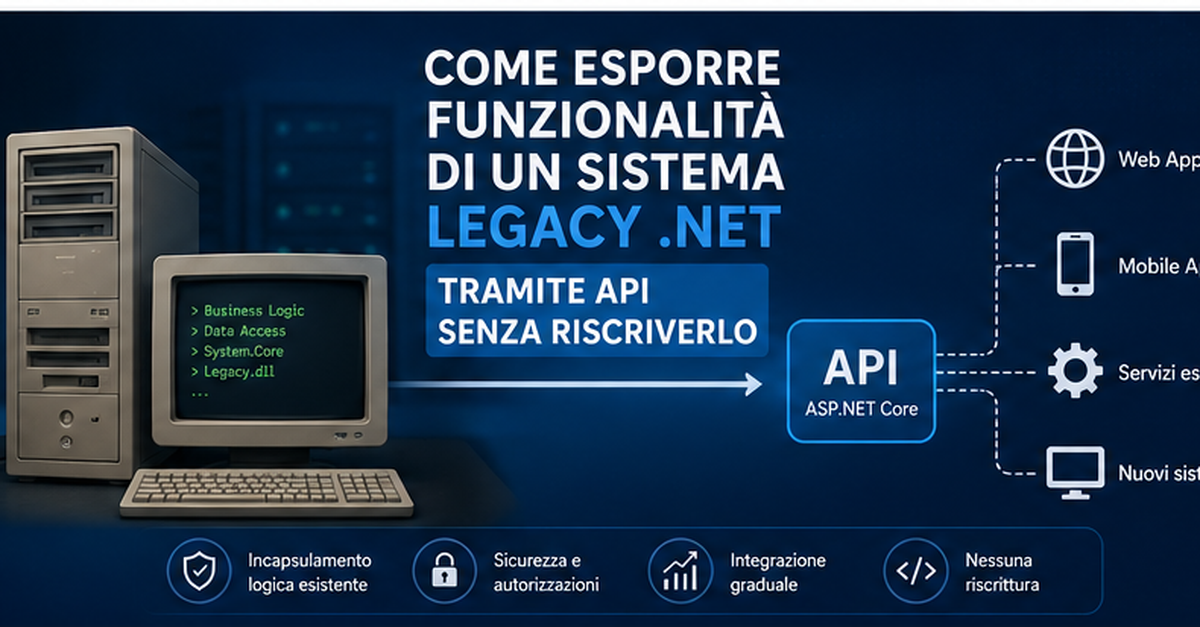
How to expose functionality of a legacy .NET system via API without rewriting it
Last updated
14 min read
A legacy .NET application may still contain robust logic and important data, but be difficult to integrate with modern portals, apps, and services. This guide shows you how to introduce a controlled API layer, gradually separating the old system from the new consumers without going through a complete rewrite right away.